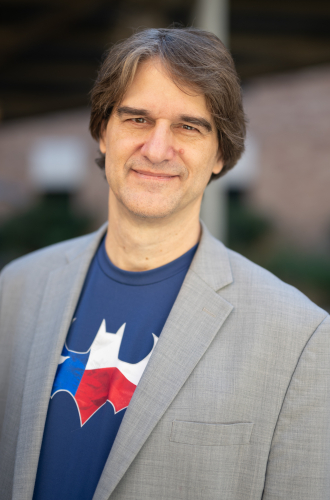
Sun Sun


Department of Chemistry & Biochemistry
The University of Texas at Austin
1 University Station A5300
Austin, TX 78712-0165


Contact Information


Office: WCH: 2.222
Phone: 471-4536

Lab


Office:
Phone:
Fax:

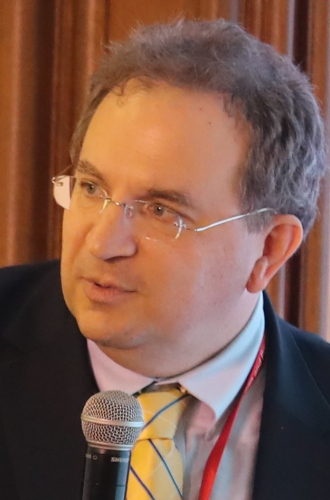
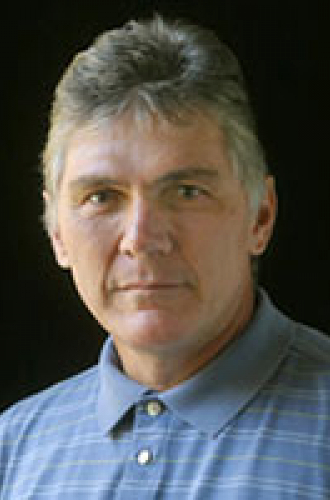
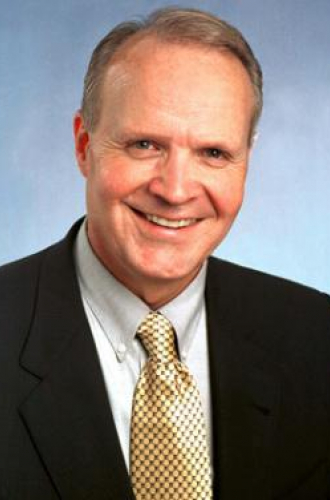
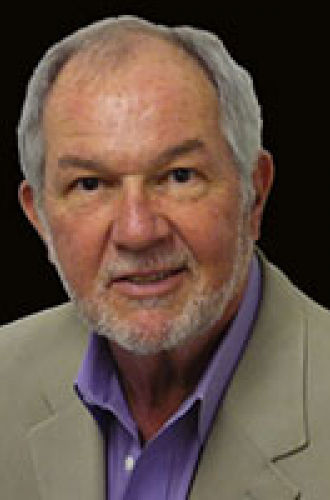
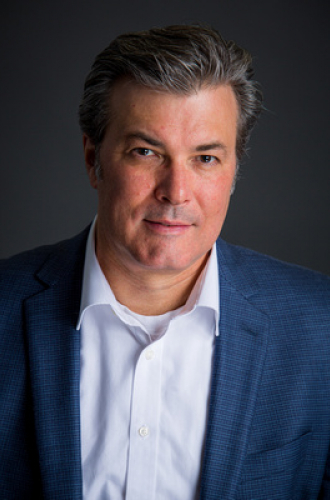
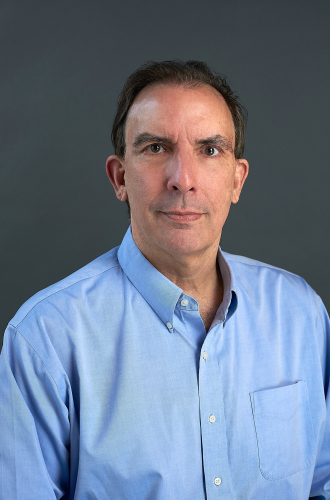
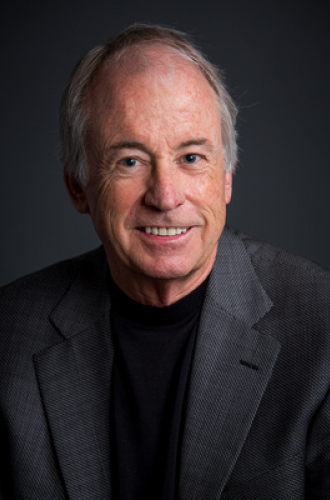
David A. Laude


dalaude@mail.utexas.edu
University Distinguished Teaching Professor, Faculty
Associate Dean of Students; Associate Dean of Undergraduate Education
College of Natural Sciences

Research Group


No information for this group.

Education


BS, University of the South, 1979
MS, Virginia Polytechnic Institute and State University, 1981
PhD, University of California - Riverside, 1984


Associate Dean


Dr. David A. Laude is Associate Dean for Undergraduate Education in the College of Natural Sciences and a professor of chemistry and biochemistry. His research interests are in the area of instrumentation development in the field of mass spectrometry and he has trained over 20 PhDs in the field. Dr. Laude has a passion for teaching and works hard to provide the very best educational environment for students in the College. He is involved with numerous College retention and enrichment programs including UTeach, Texas Interdisciplinary Plan and the Dean's Scholars honors program. He also works hard to promote undergraduate research in the College and organizes a large poster session each year that displays the research accomplishments of CNS students. He currently teaches general chemistry to 500 eager freshman students each semester and tries to make each class an enthusiastic introduction to the excitement and relevance of science.

The Associate Dean for Undergraduate Education reports directly to the Dean of the College and supervises all aspects of the undergraduate academic experience including curriculum and instruction, programs for student success and enrichment, and student academic services. Among student services efforts is a substantial advising infrastructure that assists students with degree and course selection, degree audits and petitions, and participation in the wide range of extracurricular academic opportunities in the College. The associate dean directs the advising mission of the College through leadership in programmatic development, as final authority within the Student Division on advising policy and petition matters, and by making recommendations to the Dean in all personnel decisions including hiring, discipline and salary. In his capacity as Associate Dean for Undergraduate Education, Dr. Laude has worked aggressively to create an inviting community for entering freshmen to succeed in the College of Natural Sciences.


Research Synopsis

Until recently, Professor Laude maintained a research program in analytical mass spectrometry in the Department of Chemistry and Biochemistry. The program graduated 22 Ph.D. students and produced 95 refereed publications. Dr. Laude is best known for his research with Fourier transform ion cyclotron resonance mass spectrometry (FTICR). His students conducted research on fundamentals of ion motion in trapped ion cells, development of novel FTICR instrumentation and applications in analytical biochemistry. The laboratory developed a unique approach to coupling electrospray ionization with FTICR detection - the use of concentric, differential pumped vacuum chambers. The lab also worked on ion remeasurement techniques in which the same packet of ions is stabilized and remeasured hundreds of times. The group investigated the viability of open trapped ion cells for FTICR. These cells were found to possess a unique and potentially important stability region for trapping ions and permitted the first demonstration of three-dimensional ion stability in a d.c. trapping field. This approach to motional stabilization is radically different and far simpler than other methods now in use in FTICR and suggest a potentially new approach to ion trap mass spectrometry. Finally, efforts to understand the higher-order structure of gas phase biomolecules was performed using electrospray/FTICR. Techniques including H/D exchange, ion dissociation and ion mobility were used to distinguish the effects of charge and structure on gas-phase conformation.

http://cns.utexas.edu/student/cns_staff/laudecv.pdf


Representative Publications


No information for this group.