![]() |
Research GroupNo information for this group. |
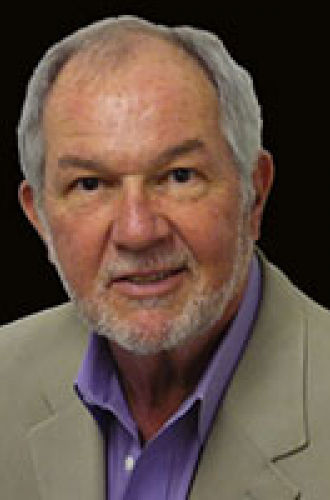
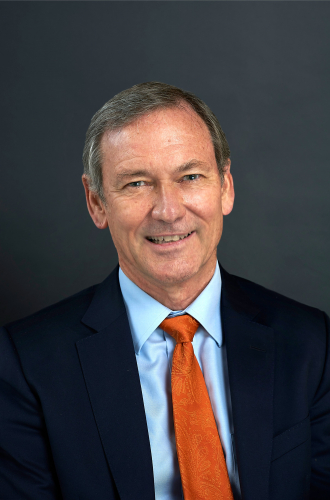
EducationBS, University of Kansas, 1960 PhD, Yale University, 1965 Cancer Research Scientist, Roswell Park Memorial Institute (1964-68) |
|
|
|
Our research program studies packing in molecular crystals, with the goal of elucidating, describing, and understanding the factors that determine this packing, and with a long-range aim of developing new techniques for organizing molecules in supramolecular arrays. Many important materials applications are based on properties that depend not just on the underlying molecular structure but equally strongly on the arrangements in an array of molecules. Thus, understanding the factors that influence weak intermolecular interactions is an important priority in the chemical sciences today. A very fertile ground in which to study such interactions is in the structures of molecular crystals. Increasing interest in crystal structure design motivates intense study of the packing of molecular crystals, long neglected. The rational design and preparation of organic crystalline materials will become a predictive science only when the factors that control arrangements in arrays are sufficiently well described that packing can be reliably predicted from molecular structure. Much of our research involves analysis of the 110,000 organic crystal structures in the Cambridge Structural Database to discern relationships between crystal packing symmetries and molecular features such as dipole moments, molecular shapes, functional group geometries, and electrostatics. Computational studies of packing energies are being carried out to evaluate the effects of molecular alteration on packing arrangements. Our low-temperature X-ray crystal structures studies give detailed information on specific crystals. Examples of areas under investigation are:
Patterns in intermolecular group contacts
Patterns in atom groupings that make close contact within crystals have been studied for strong interactions such as hydrogen bonds; we are exploring for such patterns for weaker, mainly van der Waals, interactions. We assess frequencies of pairwise intermolecular contacts between common atom groupings (including many functional groups). For significant interactions, we analyze the contact geometry-distances, relative group orientations, etc. - for common features. Packing energy calculations for the most significant types of inter-group contacts aid in interpretations.
Molecular shape-directed crystal engineering
We have been working with Professor James Whitesell to develop methodology for rational control of the symmetry and relative molecular orientations in crystals. This approach takes advantage of the known propensity for enantiomers to associate as pairs in racemic crystals. We are designing, synthesizing, crystallizing, and studying compounds of single enantiomers that contain two segments of nearly identical shape (isosteric) with significantly different electronic properties. Crystals of such compounds mimic centrosymmetry, but exhibit some desirable properties of noncentrosymmetric crystals.
Solvated crystal structures
Nearly 20 percent of molecular crystals contain solvent molecules. We are studying about 10,000 solvated crystals, especially those with non-hydrogen-bonding solvents, for which the environment and role of solvent molecules are not well understood. This work includes statistical studies of geometrical aspects of intermolecular interactions, including contact distances, orientation of solvent relative to surrounding groups, and comparison of volumes and surface areas of solvent vs. cavity. Packing energy calculations help clarify the role of solvent.
Hydrogen-bond patterns
We are extending graph set methodology applied to the analysis of hydrogen-bonding patterns in organic crystals. E.g., we have used this method to compare patterns in enantiomeric vs. racemic amino acid crystals, and are currently analyzing H-bonding patterns in antifolate pharmaceuticals such as trimethoprim and its chemical relatives.